Build vs Buy a Video Editor
A practical build-vs-buy guide for teams deciding whether to build a video editor from scratch or use React Video Editor as the foundation for a production product.
Sam
Creator of RVE
If you are deciding whether to build a video editor from scratch or start from an existing React foundation, the real question is not can your team build it.
It is whether building the editor itself is where your company should spend its best time.
Key takeaways
- Build when the editor itself is your moat and you need deep interaction control.
- Buy when your product value lives above the editor layer: workflow, automation, collaboration, or distribution.
- Most teams underestimate timeline complexity, preview/export consistency, and long-term maintenance.
For many SaaS products, AI tools, and embedded workflows, buying the editor foundation is the more sensible move. If you are still mapping the technical scope, start with How to Build a Video Editor in React and Web-Based Video Editor Architecture. This page is about the product decision.
Option A
Build it yourself
- You need unusual editing interactions that are central to the product.
- You have time and budget for timeline, captions, uploads, and rendering infrastructure.
- Owning every layer is strategically important, not just emotionally appealing.
Option B
Start from a React editor foundation
- You need to ship sooner and your differentiation sits above the editor.
- You want a production-ready baseline instead of re-learning the same media edge cases.
- You still want customization without spending months on undifferentiated editor plumbing.
What teams usually underestimate
Most teams imagine the visible part first: clips on a timeline, some text, a preview player, maybe export.
What they underestimate is the stack behind that surface:
- timeline math and interaction details
- synchronized preview that actually matches export
- uploads, metadata, storage references, and failure states
- captions, overlays, templates, and persistence
- render orchestration, retries, and delivery
That is why teams often begin by searching for a React video timeline component or a React video editor component and end up quietly building half a media product.
If the component-shaped integration path is exactly what you are evaluating, read React Video Editor Component: What Teams Actually Need.
If this is you
- You are adding editing into a bigger SaaS workflow rather than selling an editor by itself.
- You want your team focused on automation, collaboration, or vertical workflow logic.
- Shipping in the next quarter matters more than owning every low-level interaction detail.
Build vs buy by team type
SaaS products adding video editing
If video editing is just one step inside a broader workflow, your moat is rarely the timeline. It is more likely to be your data, your templates, your approvals, your distribution, or your audience.
That is usually a strong case for buying the foundation and putting engineering time into the workflow around it.
AI video apps
AI video products often think generation means they need a completely custom editor.
Usually they do not.
The differentiated part is often the generation pipeline, prompt orchestration, brand controls, or the workflow after generation. The editor still matters, but it does not need to be invented from zero.
Internal tools or customer portals
These teams benefit most from avoiding editor infrastructure work. If the editor enables users to trim clips, update captions, or export variants inside a bigger product flow, buying the foundation is often the safer and faster move.
That is exactly why pairing an AI workflow with an existing React editor base makes sense. For the buyer-focused version of that path, read React Video Editor for AI Video Apps.
Editor-first companies
This is the clearest case for building. If your product is fundamentally a new type of editing experience, then owning the stack may be worth it.
Why buying is often safer
- You reduce risk around timeline bugs, preview/export mismatch, and edge-case media failures.
- You can spend more of your roadmap on the workflow users actually buy for.
- You still keep control over styling, integrations, templates, and product-specific logic.
Where building may still make sense
- If the editor interaction model is your main moat, a foundation may be too constraining.
- If your UX is highly unusual, you may still want to own the stack more deeply.
- If your team genuinely wants a tooling platform, then building may be part of the strategy.
The hidden cost is not just engineering time
The real cost is opportunity cost.
Every month spent rebuilding editor infrastructure is a month not spent on:
- onboarding
- acquisition
- templates
- collaboration
- AI workflows
- integrations
- packaging and pricing
A custom-built editor might eventually be perfect. But if it delays everything that sits above it, it can slow down the whole business.
Where React Video Editor fits
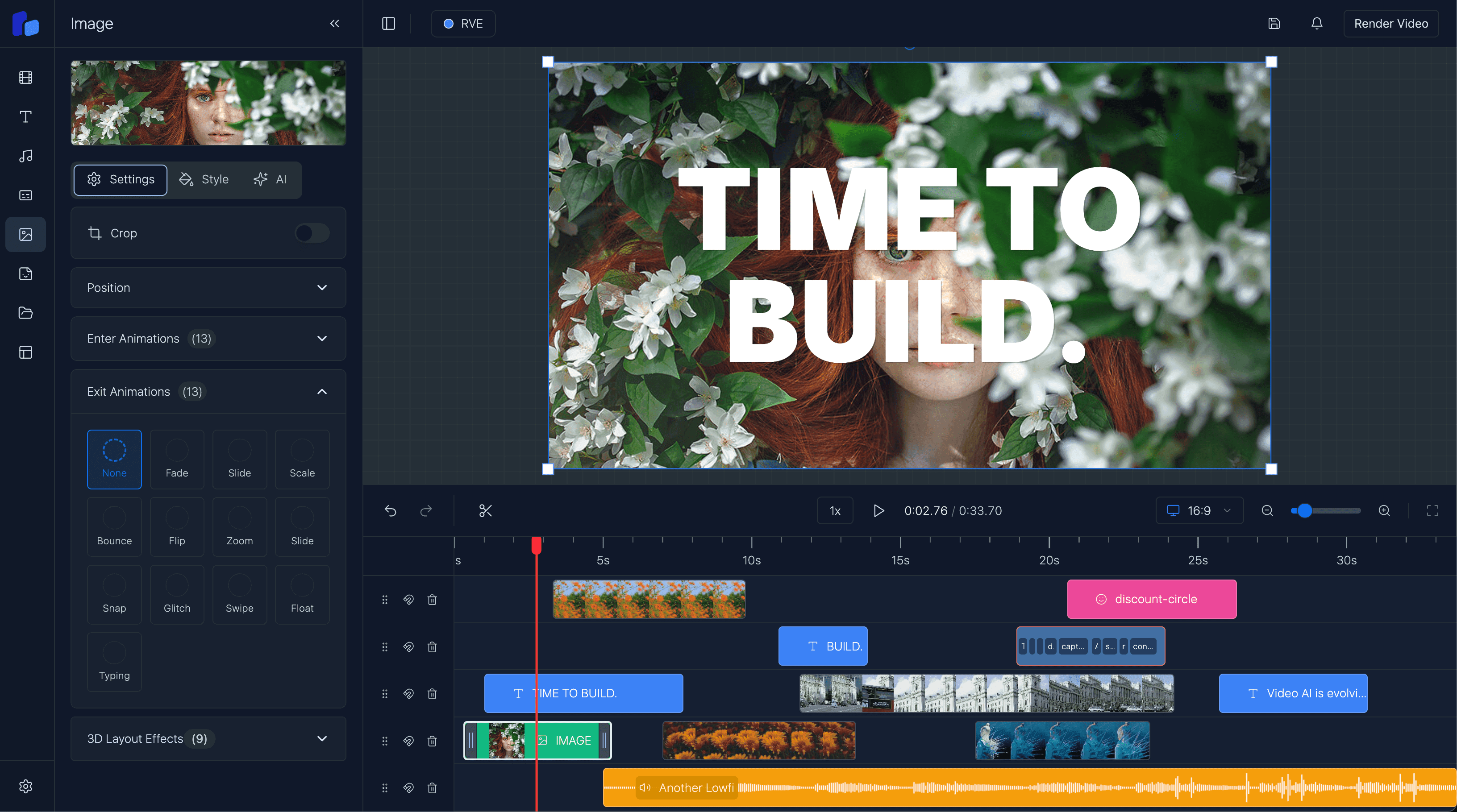
React Video Editor is useful when you want a React-native baseline around the parts teams usually struggle to build cleanly:
- timeline editing
- overlays and captions
- project/template workflows
- Remotion-based rendering
- implementation paths for React teams
That is the sweet spot: do not rebuild the boring-hard parts, but keep control over the product-specific parts.
If part of your evaluation is whether an open-source baseline is enough, read Open Source React Video Editor: What You Get, What You Still Need.
Questions readers usually ask
Next step
If your value is above the editor layer, do not burn months rebuilding the baseline
Use your engineering time on the parts users actually pay for: workflow, automation, collaboration, templates, and distribution.